

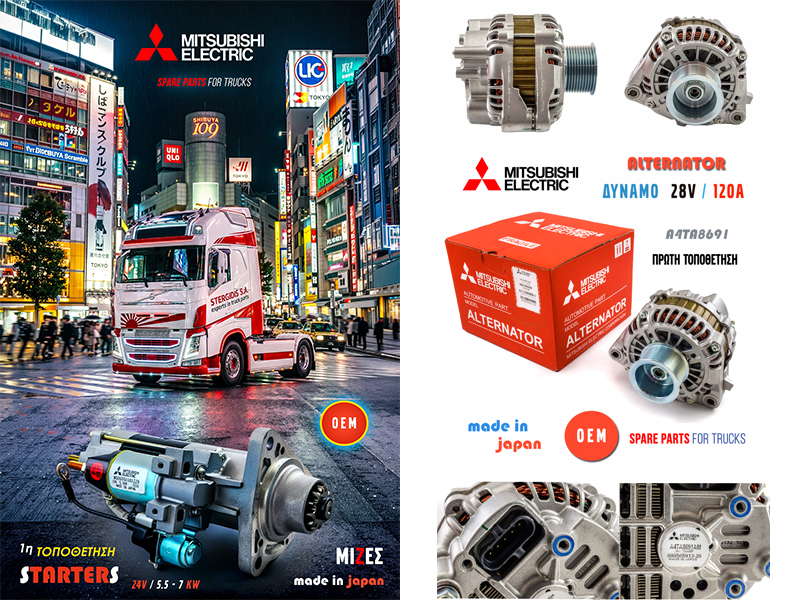
The starter is the “heart” of the starting process for every truck. Despite its small size compared to the engine, it is the component that converts electrical energy into mechanical motion, bringing the entire vehicle to life
In the transportation industry, time is money. A malfunctioning starter can immobilize a truck at critical moments, causing delays in schedules and increased towing costs. Having a brand-name starter as an immediately available replacement part ensures that the truck will get back on the road with as little downtime as possible.
Preventive maintenance prevents sudden failure. Signs such as slow engine cranking or strange metallic noises during startup indicate wear on the starter’s internal parts (such as the brushes or the coil).
Reasons for timely replacement:
Reliability: Ensures starting in extreme weather conditions.
Battery Protection: A worn-out starter motor requires more current, straining the electrical system.
Preventing Damage: A faulty starter can damage the engine’s flywheel, leading to much more expensive repairs.
Before the starter stops working completely, it usually exhibits specific symptoms:
Characteristic “Click”: A repeated clicking sound when turning the key indicates that the solenoid is receiving power but the starter motor cannot turn.
Slow Crank: If the engine turns over slowly and with difficulty, even though the battery is charged, the starter motor likely has worn-out brushes or an internal malfunction.
Grinding Noises: Grinding sounds indicate that the starter gear is not meshing properly with the flywheel, which can cause serious damage to both parts.
Smoke or a Burning Smell: Prolonged starting attempts can overheat the system, causing a short circuit or melted wiring.
To extend the life of your starter, follow these steps:
Check the Battery & Terminals: Corrosion on the battery terminals hinders the flow of current. Clean the terminals regularly and make sure the connections are tight.
Avoid Oil: Oil leaks from the engine that end up on the starter can damage its internal parts.
Do Not Over-Crank: If the truck won’t start, do not hold the starter button down for more than 10–15 seconds. Let it cool down before trying again to avoid overloading it.
Preventive Check with a Multimeter: Measure the voltage during startup; a healthy starter motor should draw at least 9.6V–10.5V under load.
Mitsubishi does not merely produce compatible replacement parts; it serves as a genuine original equipment manufacturer (OEM) for a vast percentage of heavy-duty vehicles worldwide. This offers unique advantages:
Perfect Fit (Exact Fit): Mitsubishi OEM starter motors are designed according to the exact specifications of each specific engine. This means that the gear meshes perfectly with the flywheel, eliminating the risk of misalignment or premature wear.
Top-Quality Materials: As an OEM supplier, the brand uses top-quality electrical components, coils, and switches, ensuring that the replacement part will have the same (or even longer) service life as the truck’s original starter.
Maximum Torque Under Extreme Conditions: Trucks require tremendous power to start, especially in the winter. Mitsubishi OEM starters, such as the world-renowned Diamond Gard series, are engineered to deliver high torque and consistent performance even in the most demanding transport applications.
When it’s time for a replacement, investing in a Mitsubishi OEM starter motor instead of a budget, generic aftermarket alternative is the best way to ensure your truck remains productive and safe on the road.
CONTACT US

2026-09-04 14:26:23

2026-09-04 13:46:10
2026-06-30 11:07:13